
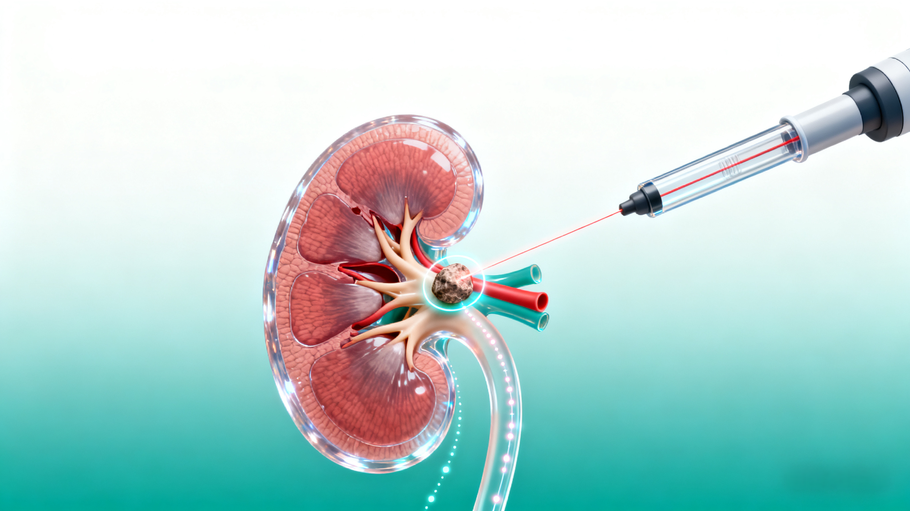
Minimally Invasive Treatment for Urinary Stones: Mini-PCNL and fURS
Relying on China's top urology team and globally leading minimally invasive stone removal technology, we offer two precise solutions: mini-PCNL and fURS, easily breaking stones in any location within the kidney and ureter, with no surface incisions and rapid recovery.
Included Services
Not Included
Suitable Conditions
Kidney stones
Ureteral stones
Our Service Process
Making your medical journey affordable and hassle-free

Accurate Diagnosis and Assessment
Through urological ultrasound, CT, etc., determine the size, location, hardness of the stone, and kidney hydronephrosis. Experts decide on fURS or mini-PCNL surgery.

Preoperative Preparation
Complete routine examinations. For fURS, a ureteral stent may be placed preoperatively for passive dilation of the ureter (first-stage surgery), followed by lithotripsy 1-2 weeks later (second-stage surgery).

Undergo Minimally Invasive Surgery
Performed under general anesthesia or spinal anesthesia. fURS: Transurethral approach, surgery time approximately 30-60 minutes. mini-PCNL: Establish percutaneous renal micro-channel, surgery time approximately 1-2 hours.

Postoperative Recovery
Postoperative indwelling of double J stent (internal stent) and urinary catheter, discharge possible after 1-2 days.

Postoperative Check-up and Stent Removal
Return to the hospital 2-4 weeks postoperative for easy removal of the internal double J stent via cystoscopy.
Long-term Prevention
Analyze the composition of the stones and develop a personalized diet and medication prevention plan based on the composition to prevent recurrence.
Ready to review this treatment plan?
Send your medical records and travel needs. We will help match hospitals and coordinate the next steps in China.
Key Benefits
Directly Targets Stones, High Stone Clearance Rate
Whether it's the 'small channel direct approach' of percutaneous nephroscopy or the 'twisting and turning reach everywhere' of flexible ureteroscopy, both can efficiently crush and remove stones, achieving a very high stone clearance rate in a single surgery.
Scarless Surface, Internal Healing
Flexible ureteroscopy (fURS) operates through the body's natural urinary tract, leaving the surface completely unscathed; percutaneous nephroscopy (mini-PCNL) requires only a small channel of about 5mm in the waist, causing far less trauma than traditional surgery.
Short Hospital Stay, Quick Return to Life
Patients can be discharged 1-3 days post-surgery, significantly shortening recovery time, allowing you to return to normal work and life faster.
Skilled Technique, Excellent Cost-Effectiveness
Chinese urologists perform a vast number of stone surgeries annually, boasting rich experience and leading technology, with costs significantly lower than in Western countries.
Solutions with mini-PCNL and fURS
These are two mainstream 'weapons' for minimally invasive treatment of urinary stones. Doctors will choose the best plan for you based on the size, location, and hardness of the stones.
Dangers of Urinary Stones
Urinary stones are hard crystals formed from components in urine within the kidneys, ureters, bladder, etc. They may block the urinary tract, causing severe renal colic and hematuria. Long-term obstruction can lead to hydronephrosis, kidney damage, or even renal failure, posing serious health risks.
The presence of stones is like a ticking time bomb, threatening your health.
Why Choose Us
Technical Equipment Advantage
Equipped with top-tier devices such as ultra-thin flexible ureteroscopes, high-power holmium lasers, and ultrasonic combined pneumatic ballistic lithotripsy systems, ensuring efficient and safe surgeries.
Expert Team Advantage
Led by senior experts from the Chinese Urological Association's Stone Disease Group, performing over a thousand minimally invasive lithotripsy surgeries annually, with expertise in handling complex and challenging stones.
Scale and Experience Advantage
China is a high-incidence area for urinary stones, and Chinese doctors lead globally in the number and complexity of minimally invasive stone surgeries performed.
Accessibility and Cost-Effectiveness Advantage
No waiting, quick surgery scheduling. Significant cost advantages.
Frequently Asked Questions
Will the stones recur after surgery?
The recurrence rate of urinary stones is relatively high. Surgery only removes the 'existing' stones but does not change your predisposition to form stones. Therefore, post-operative stone composition analysis and lifestyle interventions and medication prevention (if needed) as per medical advice are crucial. This is key to reducing the recurrence rate.
Does the surgery require many tubes? Is it uncomfortable?
After surgery, a double J stent will be placed inside the body, connecting the kidney and bladder, serving as internal drainage and a stent to prevent edema blockage. It may cause some mild lower back discomfort or frequent urination, but most patients can tolerate it, and these symptoms will disappear immediately after the stent is removed. This is an important step to ensure the safety and effectiveness of the surgery.
How to choose between fURS and mini-PCNL?
This is not a personal choice, but rather the best option recommended by a urology specialist based on your stone condition. Simply put: Small and scattered stones → prioritize fURS (non-invasive). Large and hard stones → prioritize mini-PCNL (high efficiency). The final plan is determined after a comprehensive evaluation by the doctor.
Ready to review this treatment plan?
Send your medical records and travel needs. We will help match hospitals and coordinate the next steps in China.