
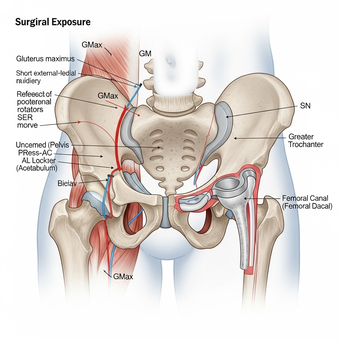
Total Hip Arthroplasty (THA)
Replacement may be considered when psoriatic arthritis causes persistent hip pain, limited mobility, or imaging shows significant joint destruction, and when conservative treatment is insufficient to maintain quality of life. A comprehensive decision is needed based on the degree of the lesion, bone quality and deformity, limb length discrepancy, skin lesions and infection control, overall health and rehabilitation ability, and prosthesis and approach compatibility.
Included Services
Not Included
Stay Required
Typical hospitalization is approximately 4–7 days, affected by the surgical approach, fixation method, pain control, thrombosis prevention, comorbidity management, and rehabilitation progress.
It is recommended to stay nearby for approximately 7–14 days after discharge to complete dressing changes, (if necessary) suture removal, gait and weight-bearing assessment, and initial follow-up, to facilitate timely treatment of problems.
Combining preoperative assessment, hospitalization, and postoperative follow-up, it is recommended to stay in China for approximately 2–4 weeks, depending on the actual surgical arrangements and recovery assessment.
Our Service Process
Making your medical journey affordable and hassle-free

Choose the Right Treatment, Surgeon & Hospital
We help you find the right medical solution for your needs

Arrange Video/Telephonic Consultation
Connect with expert doctors remotely to understand your treatment

Assist with Visa & Accommodation
We handle travel arrangements and hospital timing for your peace of mind

Airport Pickup and Hospital Transfer
Coordinate arrival support, local transfer, and interpreter scheduling

Hospital Assistance & Post-Op Support
Full medical coordination and caring assistance during recovery
Ready to discuss this treatment plan?
Send your medical records and travel needs. We will help match hospitals and coordinate the next steps in China.
What is Total Hip Arthroplasty (THA)?
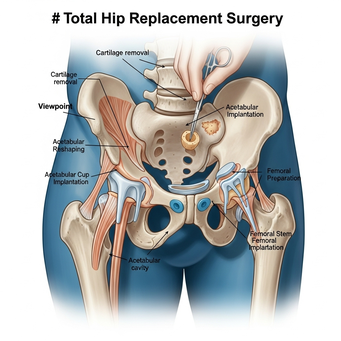
Total hip arthroplasty is performed under general or spinal anesthesia. Cemented or uncemented fixation and different bearing surfaces are optional, determined by imaging and bone quality conditions. A common practice is to remove the diseased femoral head, reshape the acetabulum, implant the acetabular cup and femoral stem, trial reduction, assess stability and limb length, and then suture. Postoperative monitoring includes pain, bleeding, and thrombosis, with gradual weight-bearing and gait training. The above is general health information and not medical advice; specific details are subject to specialist assessment and hospital protocols. Replacement may be considered when psoriatic arthritis causes persistent hip pain, limited mobility, or imaging shows significant joint destruction, and when conservative treatment is insufficient to maintain quality of life. A comprehensive decision is needed based on the degree of the lesion, bone quality and deformity, limb length discrepancy, skin lesions and infection control, overall health and rehabilitation ability, and prosthesis and approach compatibility.
Preparation Before Treatment
Preoperatively, routine blood, coagulation, and infection screening, electrocardiogram, and, if necessary, echocardiography/chest X-ray are performed to assess the risk of lower extremity thrombosis. Pay attention to the skin around the hip and psoriatic skin lesions, and coordinate with dermatology for management if necessary. The doctor will develop a plan to adjust previous medications (including anticoagulants and immune/biological agents). Prepare imaging films and medical records, translated materials, and travel arrangements; everything is subject to face-to-face assessment.
How is Total Hip Arthroplasty (THA) performed?
Total hip arthroplasty is performed under general or spinal anesthesia. Cemented or uncemented fixation and different bearing surfaces are optional, determined by imaging and bone quality conditions. A common practice is to remove the diseased femoral head, reshape the acetabulum, implant the acetabular cup and femoral stem, trial reduction, assess stability and limb length, and then suture. Postoperative monitoring includes pain, bleeding, and thrombosis, with gradual weight-bearing and gait training. The above is general health information and not medical advice; specific details are subject to specialist assessment and hospital protocols.
Perform general or spinal anesthesia
None
Remove the diseased femoral head and reshape the acetabulum
Fluoroscopy
Implant the acetabular cup and femoral stem and suture
Suture
Monitor postoperative pain and bleeding
None
Recovery Process
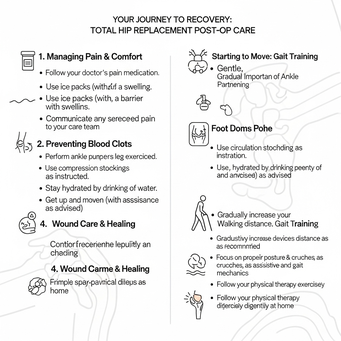
Postoperatively, monitor pain, bleeding, and thrombosis. Gradually increase weight-bearing and walking according to the approach and stability, and follow the key points of body position and daily movements to prevent dislocation. Keep the incision dry, and seek medical attention for abnormal oozing or fever. Follow-up and rehabilitation are advanced in stages; long-distance flights require assessment and the implementation of thrombosis prevention. Metal implants may trigger security checks, so it is recommended to carry proof of implantation; MRI examination requires confirmation of the prosthesis model and conditions.
Monitor postoperative pain, bleeding, and thrombosis
Gradually increase weight-bearing and gait training
Keep the incision dry and follow medical advice for follow-up
Treatment Options
Optional approaches include: continuous medication and physical therapy, femoral head/acetabular osteotomy (for specific deformities), hemiarthroplasty or surface replacement (for specific indications), different approaches for total hip replacement (posterior approach/anterolateral, etc.), fixation methods (cemented/uncemented), bearing surface materials (ceramic, metal-polyethylene, etc.). The choice depends on the degree of the lesion, bone quality and anatomy, functional goals, and lifestyle, and is determined by specialist assessment.
Cost Notes
Common inclusions (subject to the hospital's official quotation): preoperative assessment and basic examinations, anesthesia and intraoperative monitoring, hip replacement surgery and routine consumables, standard ward care, basic postoperative medications and discharge summary, initial rehabilitation guidance. Does not include upgrades to non-routine or high-end consumables, additional management of complications, exceeding standard hospital stay days, personalized rehabilitation programs, and follow-up travel expenses, etc.
Costs are affected by the surgical procedure and approach, prosthesis material and bearing surface, fixation method (cemented/uncemented), whether navigation/robotics are used, imaging and laboratory tests, hospital level and length of stay, management of comorbidities and complications, and rehabilitation plan. The above information is general health information and not medical advice; diagnosis and fees are subject to face-to-face assessment and official notification from the hospital.
Cost reference updated: 2025-08
Frequently Asked Questions
What are the common complications?
Including bleeding, infection, thrombosis, dislocation, differential leg length, and implant-related problems, the hospital will carry out perioperative prevention and monitoring.
Do I need to stop biological agents?
May need to be adjusted or suspended, specifically evaluated and planned jointly by the rheumatology, anesthesiology, and surgical teams, please refer to the doctor's advice during the consultation.
What information needs to be prepared?
Bring identification, previous medical records and imaging, medication list and allergy history to facilitate comprehensive assessment and planning by the doctor.
How to prevent dislocation after surgery?
Follow approach-related body position and movement restrictions, and follow the rehabilitation therapist's instructions for getting up, turning around, and sitting down; avoid extreme flexion or crossing legs in the early stages.
Will implants affect security checks or MRI?
May trigger metal detection, it is recommended to carry proof of implantation; most modern prostheses are conditional MRI, and the model and hospital prompts need to be checked before the examination.
How soon can I go up and down stairs or drive?
Most people practice going up and down stairs early under protection; driving requires pain control, reaction and muscle strength to meet standards, and doctor's approval, and the time varies from person to person.
How soon can I walk with weight-bearing after surgery?
Depends on the fixation method, bone quality, and intraoperative stability, and the doctor and rehabilitation team will guide weight-bearing and gait training in stages.
Will psoriatic skin lesions affect the choice of incision?
The incision and timing will be selected comprehensively based on the location and mobility of the skin lesions, and dermatological treatment will be performed first if necessary to reduce the risk of infection and healing.
Is it necessary to prepare blood or have a blood transfusion?
Determined by preoperative assessment and intraoperative blood loss, the hospital will follow standardized blood transfusion indications and blood management strategies.
Ready to discuss this treatment plan?
Send your medical records and travel needs. We will help match hospitals and coordinate the next steps in China.