
Endoscopic Discectomy (PELD/UBE)
Endoscopic decompression can be considered when lumbar disc herniation is clearly diagnosed and consistent with symptoms, conservative treatment (medication, physical therapy, injections, etc.) has limited effect, or progressive neurological deficits or unbearable radiating pain occur. The decision is based on a comprehensive evaluation of imaging classification, lesion segment and degree of separation, overall health, and anesthesia risk, as determined by a specialist.
Included Services
Not Included
Stay Required
Typical hospital stay is 1–3 days; depends on anesthesia method, resection range, pain and activity recovery, and whether foraminoplasty and other treatments are combined.
It is recommended to stay near the hospital for 3–7 days after discharge for wound care, dressing changes, and follow-up, to facilitate adjustments to pain relief and rehabilitation plans based on recovery response.
Including preoperative evaluation, hospitalization, and discharge follow-up, it is recommended to stay in China for approximately 7–14 days; the actual arrangement is subject to the hospital schedule and individual recovery.
Our Service Process
Making your medical journey affordable and hassle-free
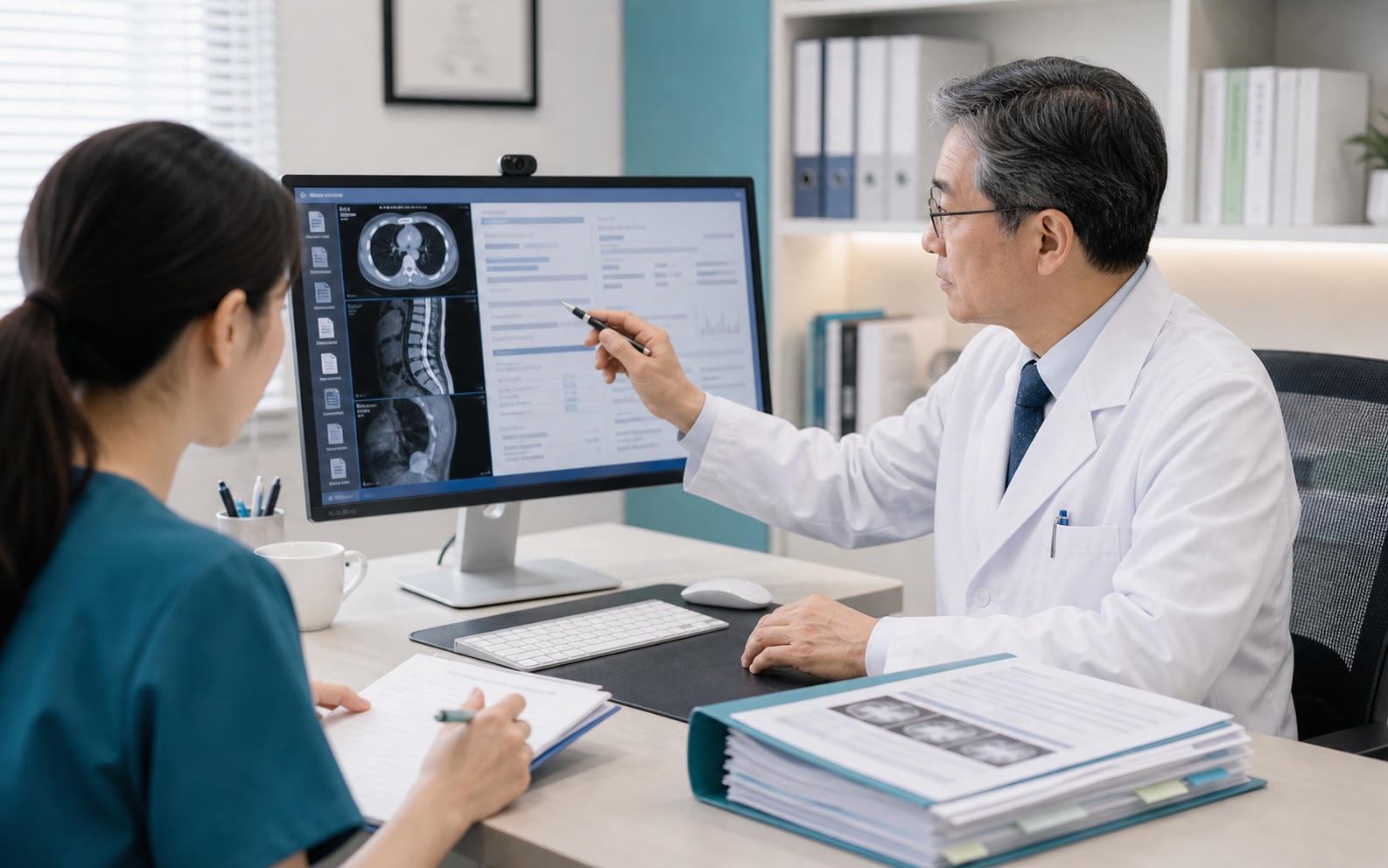
Choose the Right Treatment, Surgeon & Hospital
We help you find the right medical solution for your needs

Arrange Video/Telephonic Consultation
Connect with expert doctors remotely to understand your treatment

Assist with Visa & Accommodation
We handle travel arrangements and hospital timing for your peace of mind

Airport Pickup and Hospital Transfer
Coordinate arrival support, local transfer, and interpreter scheduling

Hospital Assistance & Post-Op Support
Full medical coordination and caring assistance during recovery
Ready to discuss this treatment plan?
Send your medical records and travel needs. We will help match hospitals and coordinate the next steps in China.
What is Endoscopic Discectomy (PELD/UBE)?
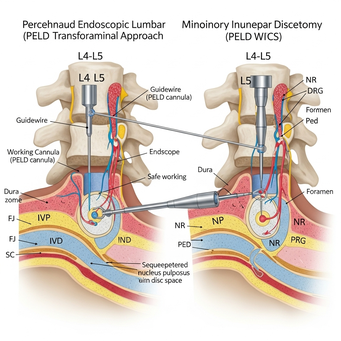
This procedure often uses percutaneous or biportal endoscopy, combined with foraminoplasty if necessary. Usually, a channel is established under image guidance, and soft tissues are separated with the aid of an endoscope and energy devices to remove the protruding disc tissue and decompress the compressed nerve. Hemostasis and irrigation are performed after the operation, and small incisions are sutured. Postoperative monitoring of pain, sensation, and muscle strength aims to relieve compression and restore activity. The above is general health information, not medical advice; the specific plan is subject to specialist evaluation and hospital protocol. Endoscopic decompression can be considered when lumbar disc herniation is clearly diagnosed and consistent with symptoms, conservative treatment (medication, physical therapy, injections, etc.) has limited effect, or progressive neurological deficits or unbearable radiating pain occur. The decision is based on a comprehensive evaluation of imaging classification, lesion segment and degree of separation, overall health, and anesthesia risk, as determined by a specialist.
Preparation Before Treatment
Complete blood tests, coagulation tests, electrocardiogram, and echocardiogram/imaging if necessary, as directed by the doctor; evaluate previous medications and anticoagulation discontinuation plans; confirm allergy history and device compatibility; prepare recent MRI/CT films and reports; arrange translation and travel documents; follow instructions such as fasting and skin preparation. Everything is subject to the face-to-face consultation at the medical institution.
How is Endoscopic Discectomy (PELD/UBE) performed?
This procedure often uses percutaneous or biportal endoscopy, combined with foraminoplasty if necessary. Usually, a channel is established under image guidance, and soft tissues are separated with the aid of an endoscope and energy devices to remove the protruding disc tissue and decompress the compressed nerve. Hemostasis and irrigation are performed after the operation, and small incisions are sutured. Postoperative monitoring of pain, sensation, and muscle strength aims to relieve compression and restore activity. The above is general health information, not medical advice; the specific plan is subject to specialist evaluation and hospital protocol.
Establish a surgical channel percutaneously using an endoscope.
Endoscope
Remove the intervertebral disc tissue through image guidance.
Endoscope/Imaging
Suture the small incision after hemostasis.
Suture
Monitor pain and nerve function.
None
Recovery Process
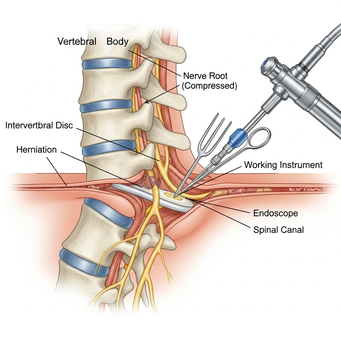
Short-term postoperative monitoring of vital signs and neurological signs; get out of bed early as directed by the doctor, gradually increase walking, and avoid bending, twisting, and heavy lifting; keep the wound dry and follow up on time; seek medical attention promptly if pain or numbness worsens, or if fever and exudation occur. Air travel can be arranged after doctor's evaluation; no implants usually do not affect security checks.
Postoperative monitoring of vital signs and neurological signs.
None
Get out of bed early as directed by the doctor and gradually increase walking.
None
Keep the wound dry and follow up on time.
None
Treatment Options
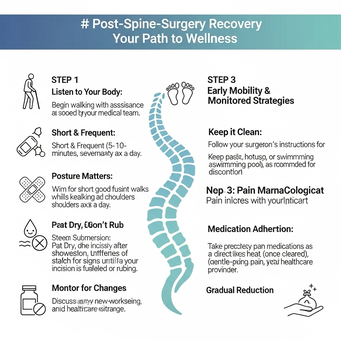
Optional paths include: continuous conservative treatment (medication, block/radiofrequency, rehabilitation training); microscopic discectomy; endoscopic paths of percutaneous endoscopy (PELD) and biportal endoscopy (UBE), etc. Whether to combine foraminoplasty or partial laminectomy depends on the direction of the protrusion, channel conditions, and individual anatomy, as determined by a specialist.
Cost Notes
Common inclusions: preoperative basic evaluation (blood test, electrocardiogram, necessary imaging), intraoperative imaging and monitoring, endoscopic/microscopic discectomy, standard ward care, and discharge summary; excludes additional treatment for complications, upgrades to non-standard consumables, exceeding standard hospital stay days, and additional follow-up travel expenses, etc.
Influencing factors: surgical method selection (PELD/UBE/microscopic), lesion segment and laterality, endoscopic instruments and consumables, imaging and laboratory tests, hospital level and length of stay, complications and additional treatment, whether to combine foramen enlargement, etc. The above information is general health information, not medical advice; diagnosis and treatment and costs are subject to face-to-face evaluation and the hospital's official notification.
Cost reference updated: 2025-08
Frequently Asked Questions
Is it necessary to recheck the images?
Usually evaluated during short-term follow-up visits, whether to supplement MRI/CT is determined by symptom changes and the doctor's judgment.
What is the possibility of recurrence?
There is a risk of recurrence, which is affected by the condition of the intervertebral disc and life load; following doctor's advice for rehabilitation and core muscle training helps reduce the risk.
Is it necessary to wear a lumbar brace?
Short-term wearing may help some patients with early activity safety, whether it is needed and the wearing time are determined by specialist evaluation.
How soon can I return to work and exercise?
Clerical work is usually earlier, while physical work and work with high loads on the waist require longer; generally adjusted individually within a range of 2–6 weeks.
How big is the incision, and is the scar obvious?
Usually a small incision of a few millimeters to about 1–2 centimeters, the appearance of the scar is related to individual physique and care.
Will the symptoms disappear immediately after surgery?
Some pain can be relieved quickly, while numbness and muscle strength often recover gradually, and the time required is affected by the duration of nerve compression and individual differences.
Is general or local anesthesia required for the surgery?
Both can be used, depending on the surgical method, segment, and individual tolerance, as determined by a comprehensive evaluation by the anesthesiology and surgery departments.
Can I fly or take long-distance transportation after surgery?
It needs to be decided by the doctor based on the recovery assessment. It is recommended to move around and hydrate during long journeys to prevent thrombosis and lumbar fatigue.
Ready to discuss this treatment plan?
Send your medical records and travel needs. We will help match hospitals and coordinate the next steps in China.