
Proton Therapy
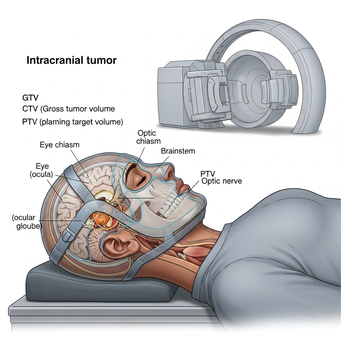
Proton radiotherapy can be evaluated when both tumor control and critical organ tolerance need to be taken into account (such as those with important structures adjacent to the skull base or those who need repeated radiotherapy). Whether it is applicable depends on the extent of the lesion, previous dose accumulation, organ risk, equipment accessibility and multidisciplinary assessment results, and is not determined by a single factor.
Included Services
Not Included
Stay Required
Mostly performed in outpatient clinics; short-term hospitalization for 0–3 days may be required for evaluation or combined treatment, depending on individual conditions and center arrangements.
It is recommended to stay nearby for about 5–7 weeks to facilitate daily irradiation and discomfort management, as well as periodic follow-up and plan fine-tuning.
A total of 6–8 weeks is recommended (including assessment/planning, the entire course of treatment, and follow-up after completion), subject to the actual schedule.
Our Service Process
Making your medical journey affordable and hassle-free

Choose the Right Treatment, Surgeon & Hospital
We help you find the right medical solution for your needs

Arrange Video/Telephonic Consultation
Connect with expert doctors remotely to understand your treatment

Assist with Visa & Accommodation
We handle travel arrangements and hospital timing for your peace of mind

Airport Pickup and Hospital Transfer
Coordinate arrival support, local transfer, and interpreter scheduling

Hospital Assistance & Post-Op Support
Full medical coordination and caring assistance during recovery
Ready to discuss this treatment plan?
Send your medical records and travel needs. We will help match hospitals and coordinate the next steps in China.
What is Proton Therapy?
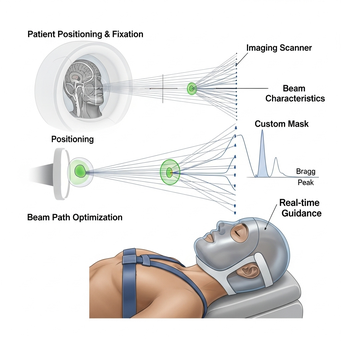
Proton radiotherapy is based on the Bragg peak principle, which concentrates the peak dose in the target area to reduce the dose received by distal normal tissues. The process usually includes body position fixation, localization scan and multi-mode image fusion. Doctors and physicists delineate the target area and organs at risk, and optimize the beam path and energy layer. Image guidance and daily verification are performed during treatment, and the plan is adjusted when necessary to match changes in body shape or anatomy. The process focuses on reactions such as mucosa, skin and swallowing, and provides nutritional and oral care support. The above is general health information, not medical advice; the specific situation is subject to specialist assessment and hospital plan. Proton radiotherapy can be evaluated when both tumor control and critical organ tolerance need to be taken into account (such as those with important structures adjacent to the skull base or those who need repeated radiotherapy). Whether it is applicable depends on the extent of the lesion, previous dose accumulation, organ risk, equipment accessibility and multidisciplinary assessment results, and is not determined by a single factor.
Preparation Before Treatment
Preparation usually includes: summary of medical history and imaging data (MRI/CT/PET-CT if applicable), blood tests and electrocardiogram, and cardiac function evaluation if necessary; dental and metal restoration evaluation; making fixed devices and positioning; adjustment of anticoagulant/antiplatelet drugs is formulated by the doctor. It is recommended to prepare allergy history, previous radiotherapy dose summary, translation and travel documents. Subject to consultation at the medical institution.
How is Proton Therapy performed?
Proton radiotherapy is based on the Bragg peak principle, which concentrates the peak dose in the target area to reduce the dose received by distal normal tissues. The process usually includes body position fixation, localization scan and multi-mode image fusion. Doctors and physicists delineate the target area and organs at risk, and optimize the beam path and energy layer. Image guidance and daily verification are performed during treatment, and the plan is adjusted when necessary to match changes in body shape or anatomy. The process focuses on reactions such as mucosa, skin and swallowing, and provides nutritional and oral care support. The above is general health information, not medical advice; the specific situation is subject to specialist assessment and hospital plan.
Perform body position fixation and localization scan.
None
The doctor delineates the target area and the physicist optimizes the path.
Image Fusion/None
Image guidance and plan adjustment are performed during treatment.
Image Guidance/None
Monitor mucosal reactions and provide nursing support.
None
Recovery Process
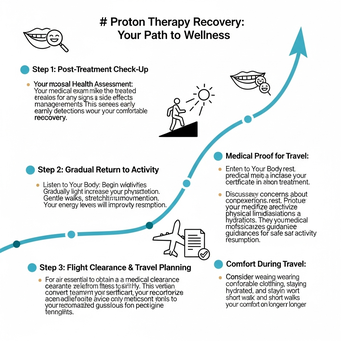
During treatment, the oral mucosa, skin and nutritional status are regularly evaluated, and oral care and swallowing training are arranged. Activities can be gradually resumed, avoiding strong stimulation or burden; follow-up time and imaging nodes are formulated by the center. You can fly after specialist confirmation, and it is recommended to keep the treatment certificate for easy communication during travel.
Regularly evaluate the condition of the mucosa and skin.
None
Gradually resume activities and avoid strong stimulation.
None
You can fly after specialist confirmation and keep the certificate.
None
Treatment Options
Proton scanning beam therapy can be considered, or photon IMRT/VMAT can be used as an alternative; whether to combine induction/concurrent chemotherapy and subsequent boost irradiation is determined by staging and tolerance. Stereotactic radiotherapy or surgical approaches can be evaluated in recurrence or re-irradiation scenarios. The final choice depends on the tumor location, organ risk and team assessment.
Cost Notes
Commonly includes: basic pre-operative/pre-treatment examination, fixation and localization scan, proton plan optimization and physical verification, daily image correction and fractionation irradiation, standard care and case closing data. Does not include: additional treatment for complications, upgrades to unconventional equipment/consumables, observation exceeding standard days and additional follow-up travel expenses, etc. (subject to official quotation).
Influencing factors include: proton center scheduling and technology type (such as scanning beam), fractionation and total dose, whether adaptive replanning is required, imaging and laboratory tests, whether combined with systemic treatment (calculated separately), hospitalization or not, complication management and follow-up frequency, etc. The above information is general health information, not medical advice; diagnosis and treatment and costs are subject to face-to-face assessment and the hospital's official notification.
Cost reference updated: 2025-08
Frequently Asked Questions
Do I need to be hospitalized?
Most are outpatient irradiations and do not require hospitalization; if combined treatment or observation is required, short-term hospitalization will be arranged based on the assessment.
Why is the scheduling longer?
Proton centers have limited places and plan verification is more detailed, so the scheduling and preparation time will be relatively longer, and the actual situation is subject to the center's arrangement.
Will it hurt during treatment?
The irradiation itself is painless, but oropharyngeal discomfort and fatigue may occur. Nursing and supportive treatment can relieve it, and you need to follow the team's recommendations.
Can I bring dental metal restorations?
Feasibility needs to be individually assessed, which may affect dose calculation and image artifacts. The doctor will optimize the plan or make treatment suggestions based on this.
Where do the cost differences come from?
It is related to fractionation and plan complexity, whether to replan, whether to combine systemic treatment and hospitalization arrangements, etc. The final price is subject to the official quotation.
How long after completion should I have a follow-up?
The initial assessment is usually arranged within a few weeks, and subsequent follow-up is carried out according to the center's plan. The timetable is subject to the actual notification.
How should patients from other places arrange their itinerary?
It is recommended to stay near the treatment, reserve time for assessment and follow-up, and confirm the center's holidays and maintenance schedule to avoid interrupting treatment.
What is the difference between proton and photon radiotherapy?
The two have different principles and dose distribution characteristics. The choice is affected by tumor location, risk of organs at risk, and center accessibility, and is comprehensively evaluated by specialists.
Ready to discuss this treatment plan?
Send your medical records and travel needs. We will help match hospitals and coordinate the next steps in China.