
High-Intensity Focused Ultrasound Ablation (HIFU)
For adenomyosis clearly defined by imaging, with significant symptoms and limited medication control, and for those who wish to preserve the uterus, the team can assess whether to consider high-intensity focused ultrasound (HIFU). Applicability depends on factors such as lesion type and location, volume and boundaries, distance from the intestines and bladder, previous delivery/surgery history, overall health, and fertility plans.
Included Services
Not Included
Stay Required
Typical observation/hospitalization is 1–3 days; may be extended if the lesion is large, pain management needs are high, or further observation is required.
It is recommended to stay nearby for 3–7 days after discharge for ultrasound re-examination, pain management, and general care arrangements.
Combining preoperative assessment, treatment, and postoperative re-examination, it is recommended to stay in China for approximately 7–14 days, depending on the actual schedule.
Our Service Process
Making your medical journey affordable and hassle-free

Choose the Right Treatment, Surgeon & Hospital
We help you find the right medical solution for your needs

Arrange Video/Telephonic Consultation
Connect with expert doctors remotely to understand your treatment

Assist with Visa & Accommodation
We handle travel arrangements and hospital timing for your peace of mind

Airport Pickup and Hospital Transfer
Coordinate arrival support, local transfer, and interpreter scheduling

Hospital Assistance & Post-Op Support
Full medical coordination and caring assistance during recovery
Ready to discuss this treatment plan?
Send your medical records and travel needs. We will help match hospitals and coordinate the next steps in China.
What is High-Intensity Focused Ultrasound Ablation (HIFU)?
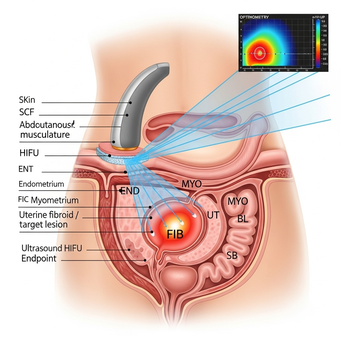
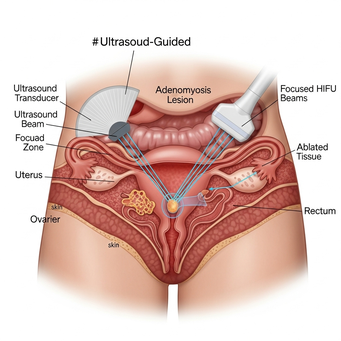
High-intensity focused ultrasound (HIFU) focuses sound energy on adenomyotic lesions under ultrasound or magnetic resonance guidance, causing controlled thermal coagulation. It usually involves completing imaging localization and planning first, then delivering energy in multiple fractions after sedation and analgesia, and monitoring the landing point and surrounding temperature with real-time imaging, adjusting parameters as necessary to protect adjacent structures. Postoperative observation includes pain and body temperature, with subsequent imaging to evaluate lesion changes. The above is general health information, not medical advice; specific information is subject to specialist assessment and hospital protocols. For adenomyosis clearly defined by imaging, with significant symptoms and limited medication control, and for those who wish to preserve the uterus, the team can assess whether to consider high-intensity focused ultrasound (HIFU). Applicability depends on factors such as lesion type and location, volume and boundaries, distance from the intestines and bladder, previous delivery/surgery history, overall health, and fertility plans.
Preparation Before Treatment
Gynecological ultrasound/pelvic MRI, complete blood count and coagulation, liver and kidney function tests, and electrocardiogram are required, with echocardiography and anesthesia evaluation as needed. The doctor will review the medication list and decide on adjustments to anticoagulation/hormone medications, inquire about allergies and metal/implant compatibility, and perform a pregnancy test if necessary. Prepare previous images and medical records, travel and translation arrangements, and fast as instructed. Subject to consultation at the medical institution.
How is High-Intensity Focused Ultrasound Ablation (HIFU) performed?
High-intensity focused ultrasound (HIFU) focuses sound energy on adenomyotic lesions under ultrasound or magnetic resonance guidance, causing controlled thermal coagulation. It usually involves completing imaging localization and planning first, then delivering energy in multiple fractions after sedation and analgesia, and monitoring the landing point and surrounding temperature with real-time imaging, adjusting parameters as necessary to protect adjacent structures. Postoperative observation includes pain and body temperature, with subsequent imaging to evaluate lesion changes. The above is general health information, not medical advice; specific information is subject to specialist assessment and hospital protocols.
Anesthetize and complete localization and planning using ultrasound.
Ultrasound
Deliver energy in multiple fractions to thermally coagulate the lesion.
Ultrasound
Real-time imaging monitors and adjusts to protect adjacent structures.
Ultrasound
Postoperative observation of pain, body temperature, and imaging evaluation.
None
Recovery Process
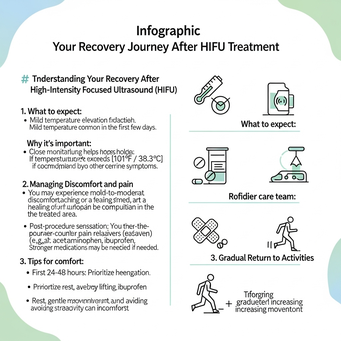
Mild lower abdominal pain or a small amount of vaginal discharge is common after surgery. Medical staff will monitor body temperature, pain, and skin condition. Gradually resume daily activities within a few days, avoid strenuous exercise and tub baths, and follow medical advice for ultrasound or MRI re-examination to evaluate lesion changes. Air travel can be arranged after doctor's evaluation; bring discharge information for customs clearance and follow-up medical care.
Postoperative monitoring of body temperature, pain, and skin condition.
Resume daily activities within a few days, avoiding strenuous exercise.
Follow medical advice for re-examination and arrange air travel if needed.
Treatment Options
Treatment for adenomyosis includes: medications (oral hormones, levonorgestrel intrauterine system, gonadotropin-releasing hormone-related regimens), high-intensity focused ultrasound (HIFU), uterine artery embolization (UAE), laparoscopic lesion resection, or hysterectomy. Whether to implement these options in combination or in stages depends on the extent of the lesion, symptoms, and fertility plans, as determined by specialist assessment.
Cost Notes
Common inclusions (subject to the hospital's official price list): preoperative basic assessment (electrocardiogram, pelvic ultrasound/MRI if necessary), intraoperative image guidance and monitoring, HIFU ablation procedure, standard ward/day ward care, and discharge summary; excludes additional treatment for complications, upgrades to non-standard consumables, days of observation exceeding the standard, and additional follow-up travel expenses.
Costs are affected by the size and number of lesions, imaging and anesthesia methods, energy and consumable usage, level and duration of hospitalization, treatment of complications, and whether additional tests are required.
Cost reference updated: 2025-08
Frequently Asked Questions
Will it leave a scar?
Generally, no incision is required. The skin may develop temporary erythema or heat sensation, which usually resolves over time.
Will it affect fertility?
HIFU aims to preserve the uterus, but there is no guarantee of fertility outcomes. Uterine conditions and past medical history should be assessed before surgery, and plans should be discussed with the doctor.
Is HIFU guided by ultrasound or MRI?
Both modes are common. The hospital will choose based on equipment conditions and lesion characteristics, with the goal of ensuring clear imaging and accurate energy localization.
What if symptoms do not improve or recur?
Depending on the follow-up results, continuing follow-up, combined medication, re-ablation, or switching to other regimens can be considered, as comprehensively assessed by the team.
Is general anesthesia required? Will it hurt?
Mostly sedation and analgesia combined with local cooling and monitoring are used. Individual pain perception varies greatly; the anesthesia method is determined by the anesthesiology evaluation.
What information should I bring for the consultation?
Recent ultrasound or MRI, blood tests, previous treatment and surgery records, allergy and medication lists are helpful for rapid assessment.
What changes will occur in menstruation after surgery?
Menstrual flow and pain may gradually change. The specific reaction varies from person to person; follow-up imaging and symptoms are required as directed by the doctor.
Can it still be done if there is metal/intrauterine device in the body?
A specialist needs to assess the imaging compatibility and safety before deciding whether it is applicable or needs to be handled first.
Ready to discuss this treatment plan?
Send your medical records and travel needs. We will help match hospitals and coordinate the next steps in China.