
Autologous Stem Cell Transplantation (ASCT)
Autologous hematopoietic stem cell transplantation (ASCT) may be considered when non-Hodgkin lymphoma is sensitive to induction or salvage chemotherapy and has a high risk of relapse, or when consolidation therapy is needed after relapse. The decision is influenced by factors such as pathological subtype and stage, response to previous treatment, minimal residual disease assessment, overall physical condition and organ reserve, infection status, and whether successful mobilization and collection are possible.
Included Services
Not Included
Stay Required
Typical hospitalization is approximately 3–5 weeks for preconditioning, reinfusion, and granulocyte recovery. The duration is affected by physical condition, infection control, mucosal reactions, and the need for supportive care.
It is recommended to stay nearby for 1–2 weeks after discharge for follow-up, wound and catheter care, and medication adjustments. If recovery is poor, the doctor may extend the observation period.
Including preoperative evaluation, hospitalization, and postoperative follow-up, it is recommended to stay in China for approximately 6–10 weeks; the specific duration depends on bed and examination arrangements and individual recovery.
Our Service Process
Making your medical journey affordable and hassle-free

Choose the Right Treatment, Surgeon & Hospital
We help you find the right medical solution for your needs

Arrange Video/Telephonic Consultation
Connect with expert doctors remotely to understand your treatment

Assist with Visa & Accommodation
We handle travel arrangements and hospital timing for your peace of mind

Airport Pickup and Hospital Transfer
Coordinate arrival support, local transfer, and interpreter scheduling

Hospital Assistance & Post-Op Support
Full medical coordination and caring assistance during recovery
Ready to discuss this treatment plan?
Send your medical records and travel needs. We will help match hospitals and coordinate the next steps in China.
What is Autologous Stem Cell Transplantation (ASCT)?
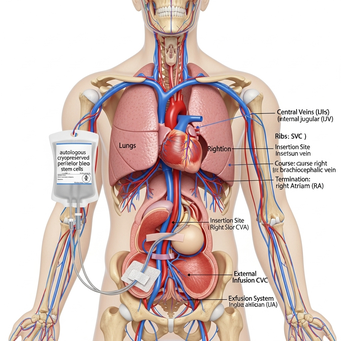
Autologous hematopoietic stem cell transplantation typically begins with drug mobilization to move hematopoietic stem cells into the peripheral blood; these are then collected using apheresis equipment and cryopreserved. After evaluation, high-dose chemotherapy is administered as preconditioning to reduce the tumor burden and create space for hematopoiesis, followed by reinfusion of the previously stored stem cells. During treatment, blood counts, infection, and organ function are routinely monitored, with blood transfusions, anti-infection measures, and nutritional support provided as needed. The overall goal is to promote hematopoietic reconstitution and a smooth discharge. The above is general health information, not medical advice; specific details are subject to specialist evaluation and hospital protocols. Autologous hematopoietic stem cell transplantation (ASCT) may be considered when non-Hodgkin lymphoma is sensitive to induction or salvage chemotherapy and has a high risk of relapse, or when consolidation therapy is needed after relapse. The decision is influenced by factors such as pathological subtype and stage, response to previous treatment, minimal residual disease assessment, overall physical condition and organ reserve, infection status, and whether successful mobilization and collection are possible.
Preparation Before Treatment
Preoperative preparation includes: blood and immunological tests, infection screening (hepatitis B/hepatitis C/HIV, etc.), electrocardiogram and echocardiogram, and lung function and imaging assessment if necessary; allergy history and previous medication records; mobilization and central venous access assessment; fertility and vaccination counseling (if applicable); personal translation and medical record organization, travel and escort arrangements. Specific plans are subject to consultation with medical institutions.
How is Autologous Stem Cell Transplantation (ASCT) performed?
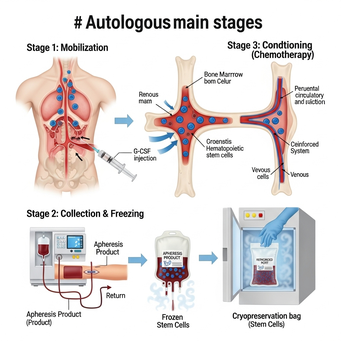
Autologous hematopoietic stem cell transplantation typically begins with drug mobilization to move hematopoietic stem cells into the peripheral blood; these are then collected using apheresis equipment and cryopreserved. After evaluation, high-dose chemotherapy is administered as preconditioning to reduce the tumor burden and create space for hematopoiesis, followed by reinfusion of the previously stored stem cells. During treatment, blood counts, infection, and organ function are routinely monitored, with blood transfusions, anti-infection measures, and nutritional support provided as needed. The overall goal is to promote hematopoietic reconstitution and a smooth discharge. The above is general health information, not medical advice; specific details are subject to specialist evaluation and hospital protocols.
Use medication to mobilize cells into the peripheral blood.
无
Collect and cryopreserve hematopoietic stem cells.
无
Administer high-dose chemotherapy for preconditioning.
无
Reinfuse the preserved stem cells to reconstruct hematopoiesis.
无
Recovery Process
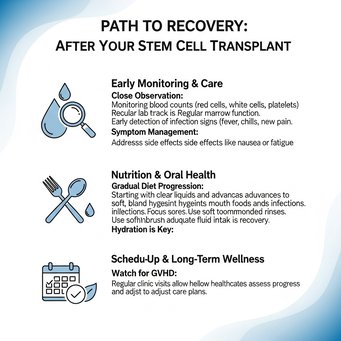
In the early post-infusion period, the focus is on monitoring blood counts, temperature, bleeding, and signs of infection, with blood transfusions, anti-infection measures, and growth factor support provided as needed. Diet is gradually transitioned, with attention to oral and skin care and reduced exposure to crowded environments. Doctors arrange periodic follow-up to assess hematopoietic reconstitution and disease control. Whether air travel is permitted is subject to clinical assessment; carry a discharge summary and medication list, and if a catheter is in place, pay attention to care and security communication when traveling.
Monitor blood counts, temperature, and signs of infection early on.
Gradually resume diet and perform oral care.
Arrange follow-up to assess hematopoietic reconstitution as directed by the doctor.
Treatment Options
Alternative approaches include: continuing or changing systemic therapy, consolidation radiotherapy, chimeric antigen receptor T-cell therapy (CAR-T), allogeneic hematopoietic stem cell transplantation, etc.; mobilization regimens may involve granulocyte-stimulating factor alone or in combination with other drugs; there are also various preconditioning regimens. Specific choices depend on pathological type, treatment response, risk assessment, and specialist opinion.
Cost Notes
Common inclusions (subject to the hospital's official quotation): preoperative evaluation (blood tests, electrocardiogram, echocardiogram/necessary imaging), stem cell collection and preservation, preconditioning chemotherapy, transplantation-related consumables and monitoring, standard ward care, and discharge summary. Excludes additional management of complications, non-standard consumables/medications, exceeding standard length of stay, and long-term follow-up travel expenses, etc.
Factors affecting cost: number of mobilization and collection sessions, preconditioning regimen and medications, blood transfusions and infection management, hospital level and length of stay, complication management, special supportive care, etc. The above information is general health information, not medical advice; diagnosis and treatment costs are subject to in-person evaluation and official notification from the hospital.
Cost reference updated: 2025-08
Frequently Asked Questions
Will it affect fertility?
High-dose chemotherapy may affect fertility. Options such as embryo/sperm/egg preservation can be discussed with the doctor before transplantation.
Does ASCT require a donor?
As it is an autologous transplant, it usually uses the patient's own stem cells and does not require an external donor; it is still necessary to confirm whether successful mobilization and collection are possible.
What are the common risks?
Possible complications include bone marrow suppression, infection, bleeding, mucositis, and fluctuations in organ function; medical staff will monitor and provide supportive care.
When can I get vaccinated?
Vaccinations need to be arranged sequentially after specialist evaluation. Do not self-administer vaccinations. The timing depends on hematopoietic reconstitution and immune recovery.
What are the components of the cost?
Includes evaluation, collection, preconditioning, and inpatient care; management of complications, non-standard consumables, and extended hospitalization may be charged separately. See "Medical Expenses in China" above for details.
How long does the whole process take?
From evaluation, mobilization and collection to hospitalization, it commonly takes weeks to months, depending on individual recovery and hospital scheduling.
What should I pay attention to in terms of diet and daily life?
Pay attention to oral hygiene and skin care, eat clean and cooked food, and try to avoid crowded places and contact with sick people.
Ready to discuss this treatment plan?
Send your medical records and travel needs. We will help match hospitals and coordinate the next steps in China.