
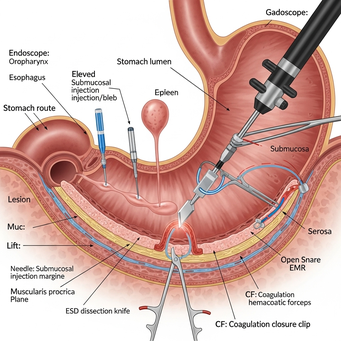
Endoscopic Mucosal Resection/Submucosal Dissection (EMR/ESD)
EMR/ESD may be considered when early gastric tumors or high-grade intraepithelial neoplasia are confined to the mucosa/superficial submucosa and require en bloc resection for accurate staging. The decision depends on lesion size, depth of invasion, differentiation grade, ulcer status, and overall health, as assessed by a multidisciplinary team.
Included Services
Not Included
Stay Required
Hospitalization is usually 2–5 days, depending on whether general anesthesia is required, the extent of the lesion and depth of dissection, whether clips and drainage are placed, post-operative pain, and risk of bleeding, etc.
It is recommended to stay nearby for 5–7 days after discharge for follow-up, dietary transition, and risk observation; if the lesion is large or combined with underlying diseases, the doctor may recommend extending the stay.
Combining pre-operative assessment, hospitalization, and post-discharge follow-up, the total stay is generally 10–14 days; the specific duration depends on individual recovery and hospital scheduling.
Our Service Process
Making your medical journey affordable and hassle-free

Choose the Right Treatment, Surgeon & Hospital
We help you find the right medical solution for your needs

Arrange Video/Telephonic Consultation
Connect with expert doctors remotely to understand your treatment

Assist with Visa & Accommodation
We handle travel arrangements and hospital timing for your peace of mind

Airport Pickup and Hospital Transfer
Coordinate arrival support, local transfer, and interpreter scheduling

Hospital Assistance & Post-Op Support
Full medical coordination and caring assistance during recovery
Ready to discuss this treatment plan?
Send your medical records and travel needs. We will help match hospitals and coordinate the next steps in China.
What is Endoscopic Mucosal Resection/Submucosal Dissection (EMR/ESD)?
Under sedation or anesthesia, the lesion is assessed and marked via gastroscopy, often with submucosal injection for elevation first. EMR is often performed by circumferential incision followed by snare resection, while ESD involves layered dissection with specialized instruments until complete resection. Intraoperative hemostasis is performed concurrently, and the specimen is retrieved for pathology. Post-operative monitoring for signs of bleeding and perforation is conducted. The above is general health information and not medical advice; specific details are subject to specialist assessment and hospital protocols. EMR/ESD may be considered when early gastric tumors or high-grade intraepithelial neoplasia are confined to the mucosa/superficial submucosa and require en bloc resection for accurate staging. The decision depends on lesion size, depth of invasion, differentiation grade, ulcer status, and overall health, as assessed by a multidisciplinary team.
Preparation Before Treatment
Complete blood routine, coagulation, liver and kidney function tests, and electrocardiogram; CT/endoscopic ultrasound is required if necessary to assess invasion. The doctor will develop anticoagulant/antiplatelet management. Fast and abstain from drinking water before surgery. Inform the doctor of allergies, implanted devices, and previous surgical history. Bring medical records, imaging, and translation materials. All preparations are subject to consultation.
How is Endoscopic Mucosal Resection/Submucosal Dissection (EMR/ESD) performed?
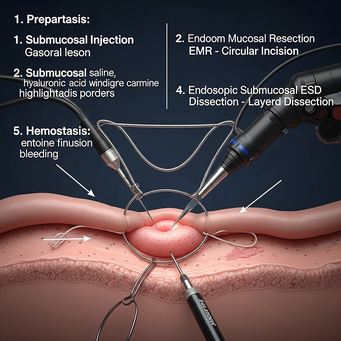
Under sedation or anesthesia, the lesion is assessed and marked via gastroscopy, often with submucosal injection for elevation first. EMR is often performed by circumferential incision followed by snare resection, while ESD involves layered dissection with specialized instruments until complete resection. Intraoperative hemostasis is performed concurrently, and the specimen is retrieved for pathology. Post-operative monitoring for signs of bleeding and perforation is conducted. The above is general health information and not medical advice; specific details are subject to specialist assessment and hospital protocols.
Assess the lesion using a gastroscope under sedation or anesthesia.
Endoscopy
Perform submucosal injection and circumferential incision or layered dissection.
Endoscopy
Perform intraoperative hemostasis and retrieve the specimen for pathological examination.
Endoscopy
Monitor for signs of bleeding and perforation after surgery.
None
Recovery Process
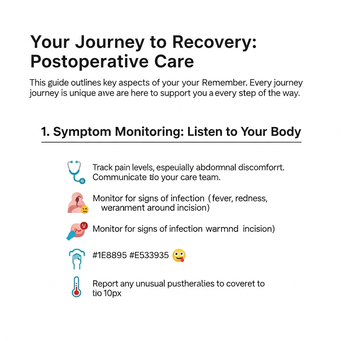
Monitor for abdominal pain, fever, melena, etc. after surgery. Early stages often involve liquid or semi-liquid diets, gradually resuming solid foods. Avoid strenuous exercise and heavy physical activity in the short term. Follow-up visits are used for wound assessment and pathological interpretation, followed by decisions on follow-up or additional treatment. Whether air travel and MRI/security checks are permissible depends on whether metal clips are retained and is confirmed by the doctor.
Monitor symptoms such as abdominal pain, fever, and melena.
None
Eat liquids early and gradually resume solid foods.
None
Determine the follow-up time and security check according to the doctor's advice.
None
Treatment Options
The choice can be made between EMR (relatively simple to perform, may be piecemeal) and ESD (pursuing en bloc resection); if en bloc endoscopic resection is difficult, piecemeal EMR, combined ablation, or surgical intervention may be considered. Whether to combine Helicobacter pylori eradication and perioperative acid suppression treatment is determined by a specialist based on individual circumstances.
Cost Notes
Common inclusions: pre-operative assessment (blood tests, coagulation, electrocardiogram; ultrasound/CT/endoscopic ultrasound if necessary), endoscopic EMR/ESD procedures and monitoring, injection/incision/dissection and hemostasis, standard ward care, pathology and discharge summary. Does not include complication management, upgrades to non-standard consumables, additional hospitalization, and follow-up travel expenses, etc.
Factors affecting costs: lesion size and number, anatomical location and fibrosis, choice of EMR or ESD and number of knives/hemostatic clips, anesthesia method, imaging and laboratory tests, hospital level and length of stay, complication management, international patient services, etc. The above information is general health information and not medical advice; diagnosis, treatment, and costs are subject to consultation assessment and the hospital's official notification.
Cost reference updated: 2025-08
Frequently Asked Questions
Will it recur after surgery?
New or residual lesions may still occur, and endoscopic follow-up is required as directed by the doctor; the follow-up interval is determined by the pathological results and individual risk.
Is general anesthesia required?
Sedation or general anesthesia can be selected based on lesion size, patient tolerance, and hospital procedures; the method of anesthesia is jointly assessed by the anesthesia and endoscopy teams.
How soon can I return to work or fly?
It is recommended to arrange this after the follow-up evaluation is stable; if metal clips are retained, the doctor will explain travel and security check precautions and carry the report with you.
How is the post-operative diet arranged?
Usually starting with liquid or semi-liquid diets, gradually transitioning to a normal diet; avoid spicy, rough, and alcoholic foods, and follow the doctor's instructions.
What are the differences between EMR and ESD?
EMR is mostly used for smaller or suitable for piecemeal lesions; ESD is more commonly used in the pursuit of en bloc resection and accurate staging. The choice depends on lesion characteristics and assessment.
How are pathology reports and follow-up conducted?
Pathology is issued uniformly by the hospital, and the doctor will develop a follow-up and additional treatment plan based on the results; the specific nodes are determined by individual recovery and assessment.
Does the fee include pathology and hospitalization?
Usually includes the surgery itself, basic monitoring, and pathology, etc., but the contents of different hospital packages vary; subject to the official quotation and list.
How are the risks of perforation and bleeding managed?
Injection, clipping, and coagulation can be used to control bleeding during surgery; post-operative vigilance for abdominal pain, fever, or melena is required. If these occur, seek medical attention promptly.
Ready to discuss this treatment plan?
Send your medical records and travel needs. We will help match hospitals and coordinate the next steps in China.