
Cochlear Implant
When there is severe–profound sensorineural hearing loss (SNHL) and limited benefit from hearing aids, the team can assess whether to consider implantation. The decision comprehensively considers hearing thresholds and speech recognition, temporal bone imaging and cochlear anatomy, age and cognitive/rehabilitation cooperation, previous treatment response, and whether there are suitable equipment and care conditions.
Included Services
Not Included
Stay Required
Typical hospital stay is approximately 3–7 days, depending on age, anesthesia and surgical complexity, wound recovery, and vertigo control, etc.
It is recommended to stay nearby for approximately 7–14 days after discharge for wound care, follow-up, and initial activation/basic tuning (if arranged by the center); if staged tuning or rehabilitation assessment is required, follow the hospital's schedule.
Considering preoperative assessment, hospitalization, and initial postoperative tuning, it is recommended to stay in China for approximately 2–4 weeks; the actual time is subject to the hospital's specific arrangements and recovery rhythm.
Our Service Process
Making your medical journey affordable and hassle-free
Choose the Right Treatment, Surgeon & Hospital
We help you find the right medical solution for your needs

Arrange Video/Telephonic Consultation
Connect with expert doctors remotely to understand your treatment

Assist with Visa & Accommodation
We handle travel arrangements and hospital timing for your peace of mind

Airport Pickup and Hospital Transfer
Coordinate arrival support, local transfer, and interpreter scheduling
Hospital Assistance & Post-Op Support
Full medical coordination and caring assistance during recovery
Ready to discuss this treatment plan?
Send your medical records and travel needs. We will help match hospitals and coordinate the next steps in China.
What is Cochlear Implant?
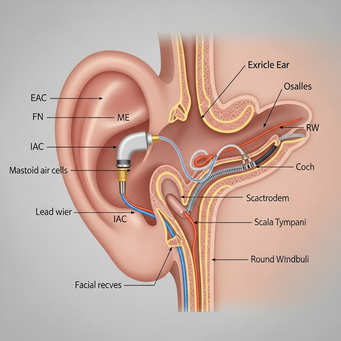
Cochlear implantation is used for severe to profound sensorineural hearing loss. The system consists of an external speech processor and an internal receiver-stimulator and electrode array. The surgery is usually performed with the aid of a microscope or endoscope, with a postauricular approach to implant the electrode through the round window or fenestration into the cochlea, fix the receiver, and perform intraoperative electrophysiological testing. Postoperative monitoring of wound and facial nerve function is performed, followed by activation programming and auditory training. The above is general health information, not medical advice; the specifics are subject to specialist assessment and hospital protocols. When there is severe–profound sensorineural hearing loss (SNHL) and limited benefit from hearing aids, the team can assess whether to consider implantation. The decision comprehensively considers hearing thresholds and speech recognition, temporal bone imaging and cochlear anatomy, age and cognitive/rehabilitation cooperation, previous treatment response, and whether there are suitable equipment and care conditions.
Preparation Before Treatment
Preoperative preparation usually requires audiometry and speech recognition assessment, electrophysiological and necessary CT/MRI (determined by the doctor), electrocardiogram and laboratory tests, and anesthesia and bleeding risk assessment. It is necessary to inform about drug allergies, previous surgery, and implantation history. It is recommended to prepare previous medical records, imaging data, translation, and accompaniment arrangements, and confirm the tuning and rehabilitation schedule with the hospital; the final decision is subject to the consultation opinion.
How is Cochlear Implant performed?
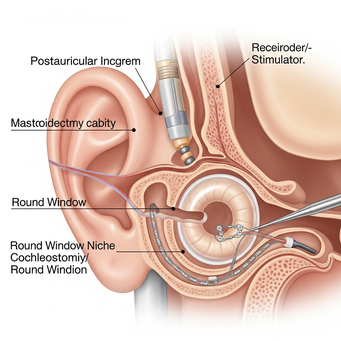
Cochlear implantation is used for severe to profound sensorineural hearing loss. The system consists of an external speech processor and an internal receiver-stimulator and electrode array. The surgery is usually performed with the aid of a microscope or endoscope, with a postauricular approach to implant the electrode through the round window or fenestration into the cochlea, fix the receiver, and perform intraoperative electrophysiological testing. Postoperative monitoring of wound and facial nerve function is performed, followed by activation programming and auditory training. The above is general health information, not medical advice; the specifics are subject to specialist assessment and hospital protocols.
After anesthesia, the surgery begins with a postauricular approach.
Endoscope
The electrode array is implanted into the cochlea through the round window or fenestration.
Endoscope
Fix the receiver and perform intraoperative electrophysiological testing.
Endoscope/Electrocautery
Postoperative monitoring of wound and facial nerve function.
None
Recovery Process
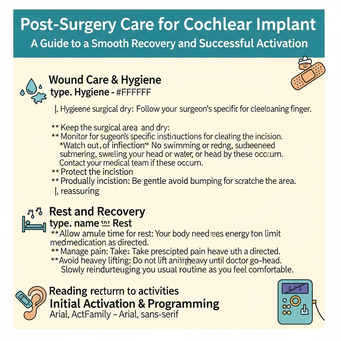
After surgery, pay attention to wound cleaning and dryness, and avoid external pressure on the magnet area of the implant; seek medical attention if persistent vertigo, bleeding, or fever occurs. Initial activation and subsequent tuning are carried out according to the center's plan, and auditory and speech rehabilitation is carried out step by step. Flying is generally possible after recovery is stable; it is recommended to carry the implant card and follow the manual inspection process when passing through security checks. MRI examination requires prior declaration of the implantation and compliance with equipment specifications.
Keep the wound clean and dry, and avoid external pressure.
Follow the plan for initial activation and auditory rehabilitation.
Follow implantation-related instructions before flying and MRI.
Treatment Options
Optional schemes include: unilateral or bilateral implantation; electroacoustic stimulation (EAS) pathways that preserve residual hearing; different electrode lengths and insertion routes; continued use of hearing aids, bone conduction, or middle ear implants as alternative options under specific indications. The trade-offs depend on audiometry data, cochlear and middle ear anatomy, communication needs, and rehabilitation conditions, and are comprehensively assessed by a specialist team.
Cost Notes
Commonly includes: basic preoperative assessment (audiometry, electrophysiology, and necessary imaging), surgery and anesthesia, intraoperative monitoring, standard ward care, discharge summary, and initial activation/basic tuning (if included in the hospital's process). Excludes: additional treatment for complications, non-routine accessories and upgrades, multiple tuning and rehabilitation training beyond the standard, extended hospitalization, and travel expenses, etc. (subject to the official quotation).
Costs are affected by the implant system model, whether it is unilateral or bilateral, speech processor configuration and accessories, audiometry and imaging items, level of hospitalization, anesthesia and age-related care, complication management, and subsequent tuning/rehabilitation frequency, etc. The above information is general health information, not medical advice; diagnosis and treatment and costs are subject to face-to-face assessment and the hospital's official notification.
Cost reference updated: 2025-08
Frequently Asked Questions
Is long-term follow-up required?
Yes. Regular tuning and auditory/speech assessment are usually required to optimize the user experience; the specific frequency is carried out according to the center's plan.
Can I do strenuous exercise or swim?
It can be carried out after the wound has healed and with the doctor's permission; the external processor needs to use protective/waterproof accessories or be removed, following the manufacturer's and hospital's recommendations.
How soon after surgery can I "hear"?
Sound perception usually begins after activation and basic tuning, and adaptation and recognition take time to train; the specific arrangements and rhythm are determined by the hospital and rehabilitation team.
What discomfort may occur after surgery?
Local swelling, pain, or transient vertigo are common and mostly relieved with recovery; if symptoms are obvious or persistent, a follow-up visit should be made in time.
Can I have an MRI or pass through security checks?
MRI can be performed in compliance with equipment and hospital specifications, and may require specific modes or accessories. It is recommended to carry the implant card and cooperate with manual inspection when passing through security checks.
Are accessories and batteries included in the cost?
Subject to the hospital's official quotation list. Some accessories and subsequent upgrades and consumable replacements may be charged separately.
Is rehabilitation different for children and adults?
Rehabilitation strategies will be adjusted according to age, previous auditory experience, and family cooperation, and the frequency and duration are determined by the team's assessment.
Can bilateral implantation be performed simultaneously?
It is feasible in some centers, depending on hearing status, communication needs, rehabilitation resources, and cost arrangements, and the path is determined after specialist assessment.
Ready to discuss this treatment plan?
Send your medical records and travel needs. We will help match hospitals and coordinate the next steps in China.